Watch the first episode of #ResearchRetrospectives, where @katherine1ee and @savvyRL interview @ZoubinGhahrama1
, VP of Google Research. Learn about his career background and insights on how to navigate the field of research ↓ https://
youtu.be/hBMXVh_UxRw
@googleai
-
Research Retrospectives: Zoubin Ghahramani on AI Research Career
By
–
-

HyperBO: Customizable Bayesian Optimization with Gaussian Processes
By
–
Hyper Bayesian optimization (HyperBO) is a highly customizable interface that pre-trains a Gaussian process model and automatically defines model parameters, making Bayesian optimization easier to use while outperforming traditional methods. Learn more → https://t.co/Tf9kSBCiNO pic.twitter.com/AySrqQtCDG
— Google AI (@GoogleAI) 6 avril 2023Hyper Bayesian optimization (HyperBO) is a highly customizable interface that pre-trains a Gaussian process model and automatically defines model parameters, making Bayesian optimization easier to use while outperforming traditional methods. Learn more → https://
goo.gle/3GnMYHG -
Google Scales Vision Transformers to 22 Billion Parameters
By
–
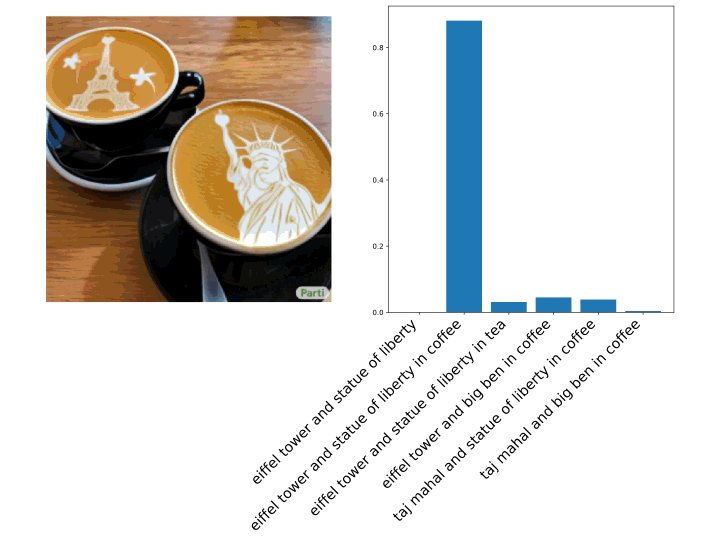
Learn about ViT-22B, the result of our latest work on scaling vision transformers to create the largest dense vision model. With improvements to both the stability and efficiency of training, ViT-22B advances the state of the art on many vision tasks → https://t.co/sQMgCGIOf4 pic.twitter.com/SRjEulBuJm
— Google AI (@GoogleAI) 31 mars 2023Learn about ViT-22B, the result of our latest work on scaling vision transformers to create the largest dense vision model. With improvements to both the stability and efficiency of training, ViT-22B advances the state of the art on many vision tasks → https://
ai.googleblog.com/2023/03/scalin
g-vision-transformers-to-22.html
… -
DataPerf: ML Challenges for Data-Centric Algorithm Validation
By
–
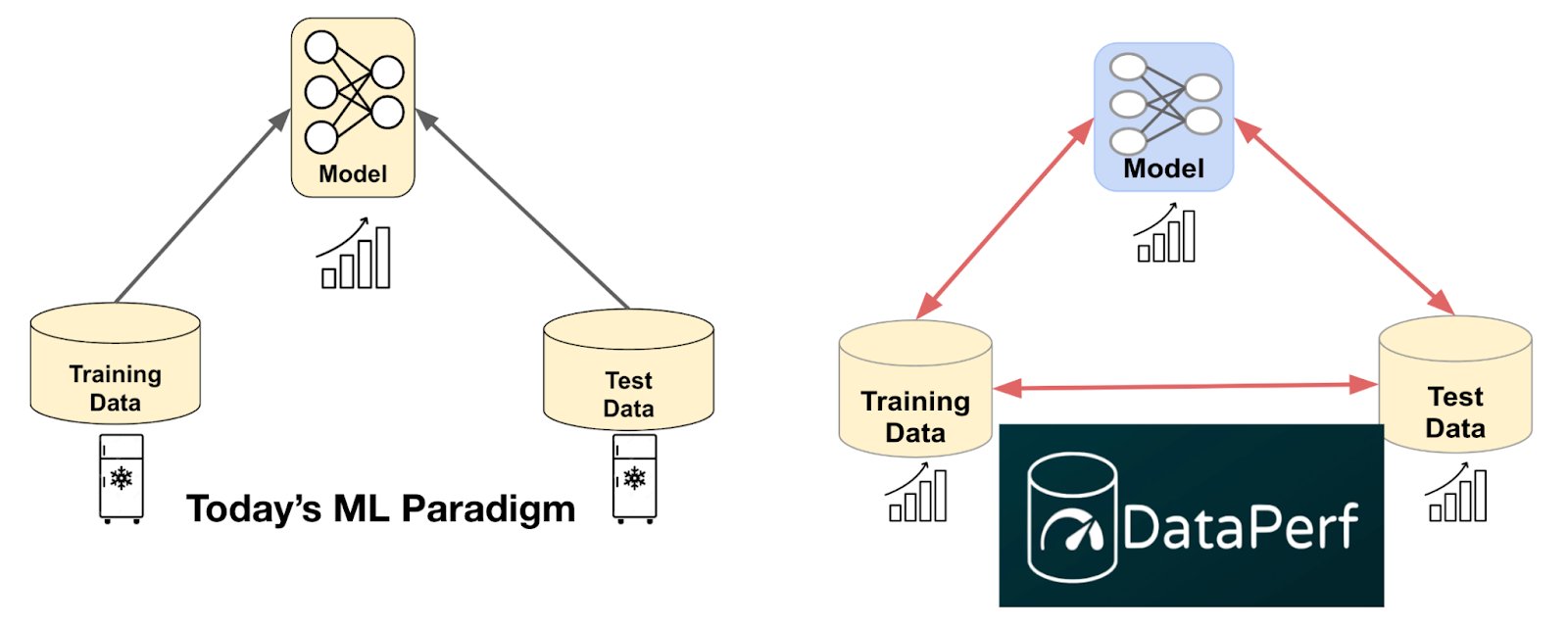
Announcing DataPerf, a set of new #ML challenges that ask participants to measure and validate data-centric algorithms and techniques to create and improve datasets using various benchmarks. Learn more and sign up → https://
ai.googleblog.com/2023/03/data-c
entric-ml-benchmarking-announcing.html
… -
ProtNLM Predicts Protein Functions from Amino Acid Sequences
By
–
Watch the next episode of #ResearchBytes, where @andreea_gane shares insights from work done in collaboration with @emblebi on ProtNLM, which can predict a short functional description from a protein’s amino acid sequence ↓
-
Efficient Differentially Private Training for Large-Scale Image Classification
By
–
Today on the blog, read all about efficient differentially private (DP) training for large-scale models, focusing on image classification. Dive into our findings, state-of-the-art results, and grab the source code ↓ #DifferentialPrivacy https://
goo.gle/3Kf2FDr -

Multilingual Task-Oriented Dialogue Dataset Released
By
–
Introducing a multilingual dataset for parsing realistic task-oriented dialogues, which includes about half a million realistic conversations in six languages, many of which exhibit common phenomena like disfluencies, user revisions and code-mixing. → https://t.co/Jum6oI8sKR pic.twitter.com/DtHALJRIfL
— Google AI (@GoogleAI) 27 mars 2023Introducing a multilingual dataset for parsing realistic task-oriented dialogues, which includes about half a million realistic conversations in six languages, many of which exhibit common phenomena like disfluencies, user revisions and code-mixing. → https://
goo.gle/3za7aZx -
Deep Learning Predicts Systemic Biomarkers from Eye Photos
By
–
Read about the systemic biomarkers that a #DeepLearning model can predict from external eye photos (i.e., photos of the front of the eye) with better accuracy than a baseline model, suggesting the potential for future non-invasive disease detection: → https://t.co/aHfLEOD34w pic.twitter.com/tTMiA0OZMD
— Google AI (@GoogleAI) 27 mars 2023Read about the systemic biomarkers that a #DeepLearning model can predict from external eye photos (i.e., photos of the front of the eye) with better accuracy than a baseline model, suggesting the potential for future non-invasive disease detection: → https://
goo.gle/3ZdpBHd -
VLMaps: Visual-Language 3D Maps for Robot Navigation
By
–
VLMaps is a map representation that fuses pre-trained visual-language embeddings into a 3D reconstruction of an environment, enabling robots to index landmarks and generate open-vocabulary maps for path planning. Learn more and copy the code → https://t.co/efct7rmqCK pic.twitter.com/UKNMdqlrGj
— Google AI (@GoogleAI) 23 mars 2023VLMaps is a map representation that fuses pre-trained visual-language embeddings into a 3D reconstruction of an environment, enabling robots to index landmarks and generate open-vocabulary maps for path planning. Learn more and copy the code → https://
goo.gle/3nievn0 -
Vid2Seq: Visual Language Model for Dense Video Captioning
By
–
Introducing Vid2Seq, a visual language model for dense video captioning that simply predicts all event boundaries and captions as a single sequence of tokens. Learn more about how it achieves state-of-the-art results on various benchmarks → https://t.co/CgQXVBnNYs pic.twitter.com/oQ1fXwEBAj
— Google AI (@GoogleAI) 17 mars 2023Introducing Vid2Seq, a visual language model for dense video captioning that simply predicts all event boundaries and captions as a single sequence of tokens. Learn more about how it achieves state-of-the-art results on various benchmarks → https://
goo.gle/3JNz97v