The 2024 @icmlconf kicks off today in Vienna, Austria! Curious what Google researchers are doing in #MachineLearning across theory and applications? Learn about our many research projects, talks, papers & #ICML2024 Google Research booth activities at https://
goo.gle/3YifyEh
@googleai
-

Google Research Showcases Machine Learning Projects at ICML 2024
By
–
-
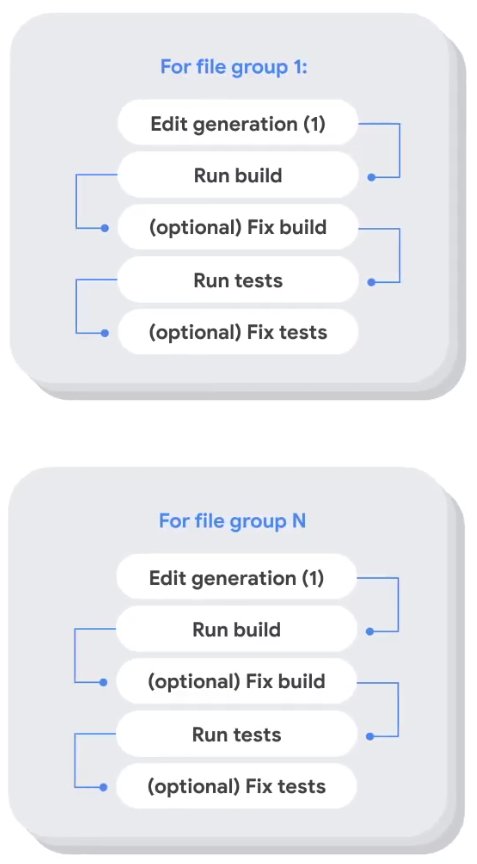
AI-Driven Approach Assists Developers Code Migrations
By
–
Maintaining a code base to keep up with changing language versions, framework updates, & data types is challenging. Here we describe our AI-driven approach to assist developers in code migrations, so they can focus on details, not get lost in the process. https://
goo.gle/4f6nn5R -
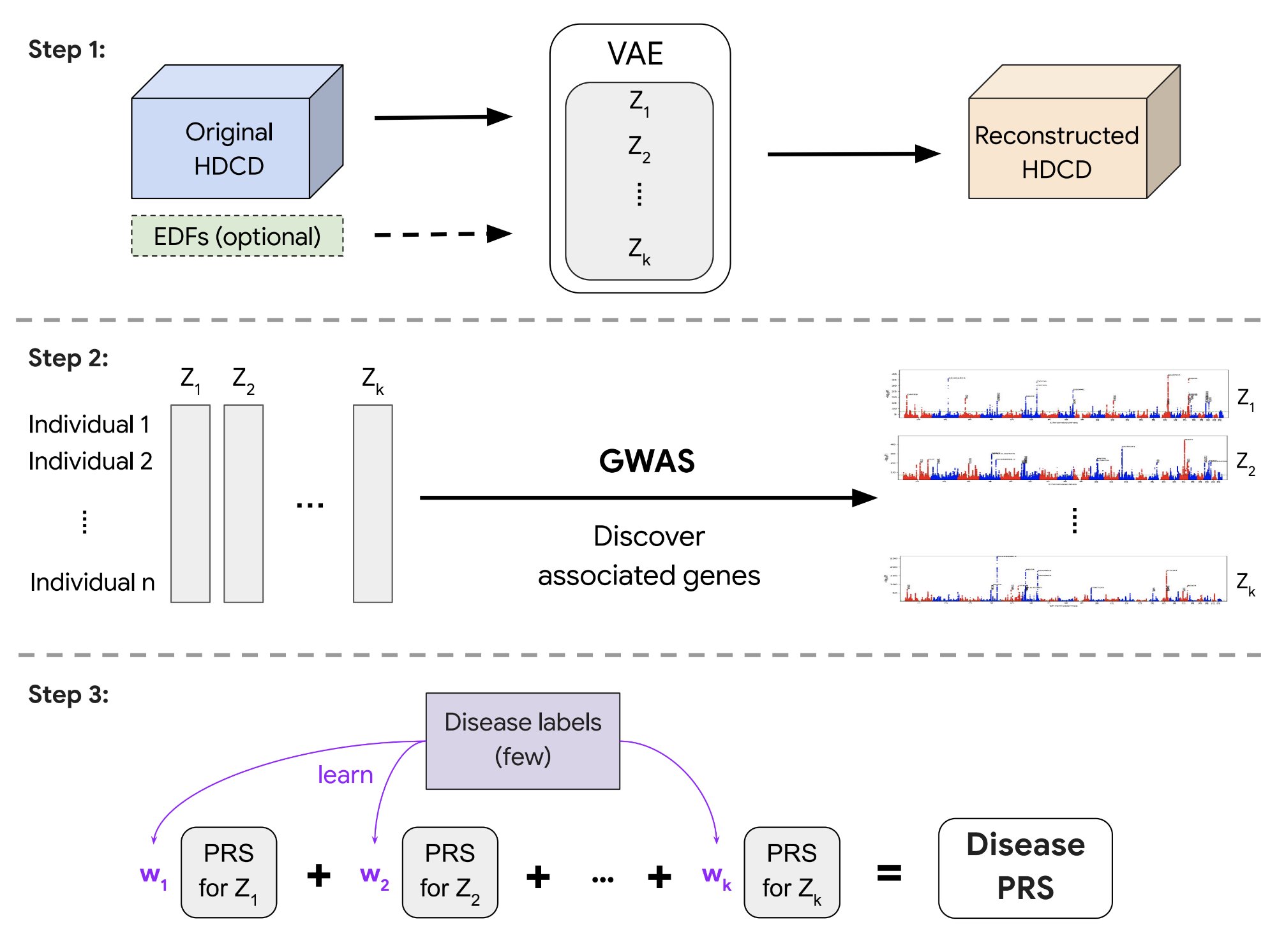
REGLE Method Reveals Genetic Basis of Organ Function
By
–
REGLE, a new method to understanding the genetic basis of organ function, leverages high-dimensional clinical data, requires no disease labels, and can incorporate expert-defined knowledge to reveal deeper insights into how our organs work. Learn more → https://
goo.gle/3y5UdD7 -
Google Project Relate Helps Non-Standard Speech Users Communicate
By
–
Project Relate is a beta Android application that aims to help people with non-standard speech communicate more easily with others. Learn how George and Adwoa use this application to overcome communication obstacles and make their voices heard → https://t.co/rDBaMIsb9S pic.twitter.com/G1qYQaxLpy
— Google AI (@GoogleAI) 16 février 2024Project Relate is a beta Android application that aims to help people with non-standard speech communicate more easily with others. Learn how George and Adwoa use this application to overcome communication obstacles and make their voices heard → https://
goo.gle/49VxmID -
Combining Offline and Continual Learning for Dynamic AI Models
By
–
The constantly changing nature of the world is a significant challenge for AI models, particularly when it causes a disconnect between training and input data. Learn how we’ve addressed this by combining the strengths of offline and continual learning ↓
-
LLM Hallucinations: Understanding and Preventing Convincing AI Errors
By
–
What are LLM hallucinations, and why can they be so convincing? We sat down with Google Research's Ray Kurzweil to discuss LLM hallucinations and what can be done to prevent them. Check it out ↓ pic.twitter.com/Qu4qMBC6Yc
— Google AI (@GoogleAI) 14 février 2024What are LLM hallucinations, and why can they be so convincing? We sat down with Google Research's Ray Kurzweil to discuss LLM hallucinations and what can be done to prevent them. Check it out ↓
-
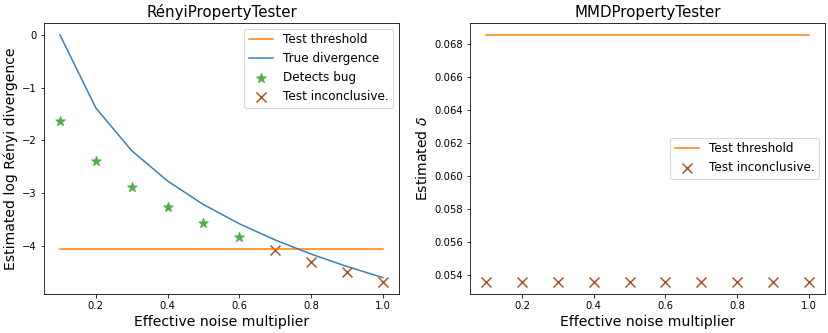
DP-Auditorium: Open Source Differential Privacy Auditing Library
By
–
Introducing DP-Auditorium, an open source library for auditing #DifferentialPrivacy guarantees with just black-box access to a mechanism, i.e., without any knowledge of the mechanism’s internal properties. Learn more and copy the code. ↓ https://
goo.gle/42GW63S -

Lumiere: Space-Time Diffusion Model Generates Coherent Videos
By
–
Lumiere is a space-time diffusion research model that generates video from various inputs, including image-to-video. The model generates videos that start with the desired first frame & exhibit intricate coherent motion across the entire video duration → https://t.co/QAMgC4TmBL pic.twitter.com/CZCDDfpMAJ
— Google AI (@GoogleAI) 13 février 2024Lumiere is a space-time diffusion research model that generates video from various inputs, including image-to-video. The model generates videos that start with the desired first frame & exhibit intricate coherent motion across the entire video duration → https://
goo.gle/47WX6C2 -
MusicLM Reconstructs Music from Brain Activity Signals
By
–
How can we reconstruct music from brain activity? Learn how our music generation model, MusicLM, was used to reconstruct music in this Research@ NYC lightning talk from Timo Denk, Software Engineer at Google → https://t.co/U8ph36azjv pic.twitter.com/IOgM0iH8BN
— Google AI (@GoogleAI) 9 février 2024How can we reconstruct music from brain activity? Learn how our music generation model, MusicLM, was used to reconstruct music in this Research@ NYC lightning talk from Timo Denk, Software Engineer at Google → https://
goo.gle/3SNJll2 -

TensorFlow GNN 1.0 Released for Production-Scale Graph Neural Networks
By
–
Graph neural networks (GNNs) have emerged as a powerful technique to leverage the uniquely heterogenous data from graphs. So, we are excited to announce the release of TensorFlow GNN 1.0 (TF-GNN), a production-tested library for building GNNs at scale → https://t.co/sJ6LDVyHuR pic.twitter.com/5ZM8gEDE6q
— Google AI (@GoogleAI) 6 février 2024Graph neural networks (GNNs) have emerged as a powerful technique to leverage the uniquely heterogenous data from graphs. So, we are excited to announce the release of TensorFlow GNN 1.0 (TF-GNN), a production-tested library for building GNNs at scale → https://
goo.gle/3w8ogZC