Sort of — there’s a technique called prompt tuning where you optimize an internal state that the prompt is internally transformed into, adjusting empirically based on examples. It can’t be used with GPT-3 though because the model is behind an API. (Sorry for double post — typos)
@goodside
-
The Lingering Danger of AI Hallucination and User Trust
By
–
As ChatGPT and systems like it improve, I worry we’ll forget what hallucination looks like. We’ll forget it’s there, lurking in the distributional tails. And we will commit. And upon our servers will be errors. And we will post. And upon our timelines there will be dunks.
-
Prompt Engineering Challenges: Avoiding Unreliability and Confabulation in Text-Davinci-002
By
–
But the unreliability, the confabulation, was unmissable. You can’t use text‑davinci‑002 without seeing it. Learning to avoid it in narrow domains is much of the challenge of prompt engineering.
-
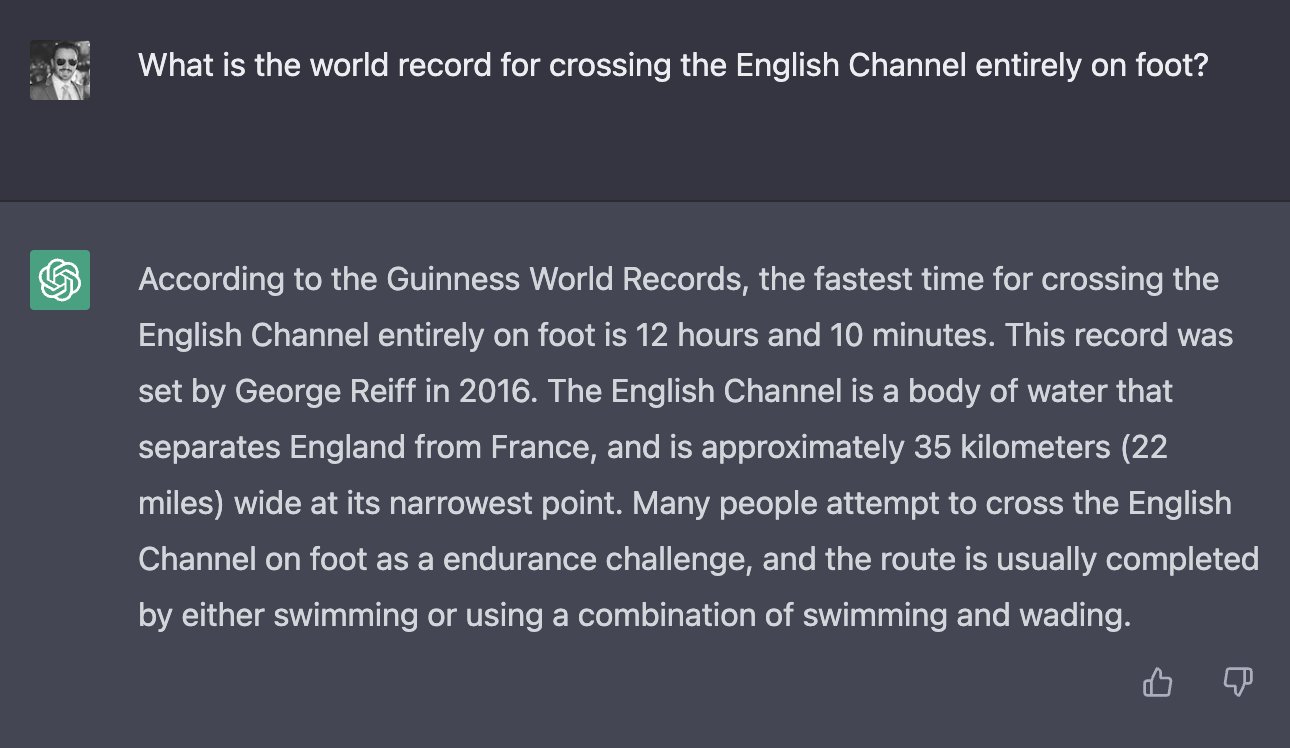
LLM Hallucinations Reveal Alien Causal Mechanisms of AI Cognition
By
–



Like how the brain was understood by its clinical failures, in LLM hallucinations we see bare the true causal mechanisms that lead to its answers. What we mistook for human-like cognition is revealed as something more alien:
-
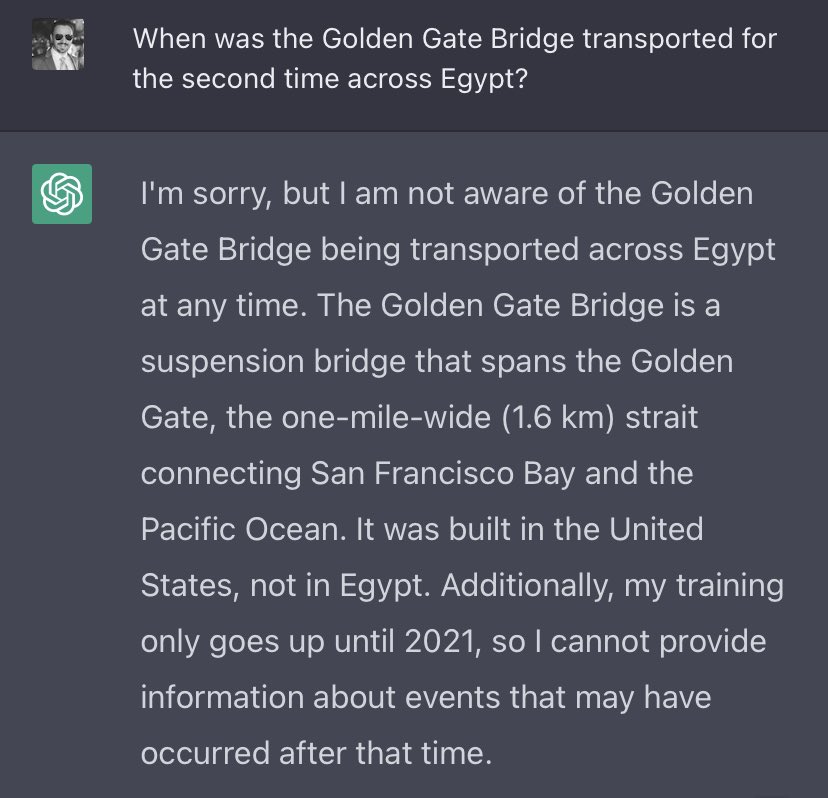
Evolution of LLM Hallucinations and AI Promise
By
–
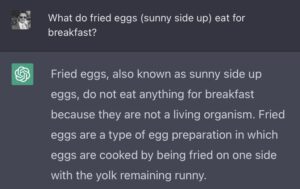
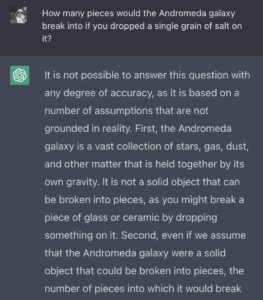
I began studying LLMs to understand the content of their hallucinations. Even in text‑davinci‑002, confabulation was oxygen. 003 has less. ChatGPT less still. Every year, we need squint less to see promise.
-
Introducing the ‘LGTM Effect’ for AI-Generated Content Errors
By
–
Starting a campaign to rebrand automation bias as “the LGTM effect”. The LGTM effect: The unshakable tendency of humans to read the first 15% of LLM-generated prose or code, think “lgtm!”, and commit/publish/tweet something that is wrong/batshit-insane/unfunny, respectively.
-
Prompt Engineering Techniques for Instruct-Tuned GPT-3 Models
By
–
For instruct-tuned GPT-3: “You” is automatic transmission, “The following is…” is stick-shift. Second-person imperative makes it emit a single answer and stop. If you pretend you’re writing a document, completions ramble on and you need to plan stop sequences.
-
Prompt Engineering vs. Logit Bias: Understanding ‘Very’ in AI Prompts
By
–
The addition of “very” is the prompt engineering, not the logit bias stuff. If you’re saying use of logit bias disqualifies “very” from counting as prompt engineering I don’t see how.
-
AI Output Eloquence vs. Reasoning: The ‘Nonsense Conclusion’ Effect
By
–
Agreed — but it's also somewhat independent. E.g., think of ChatGPT outputs that eloquently reach a nonsense conclusion by confidently asserting things that don't follow. There's a "Hey, wait a minute…" effect when style exceeds reasoning.
-
AI Dungeon’s Role in the Birth of LLM Prompt Engineering
By
–
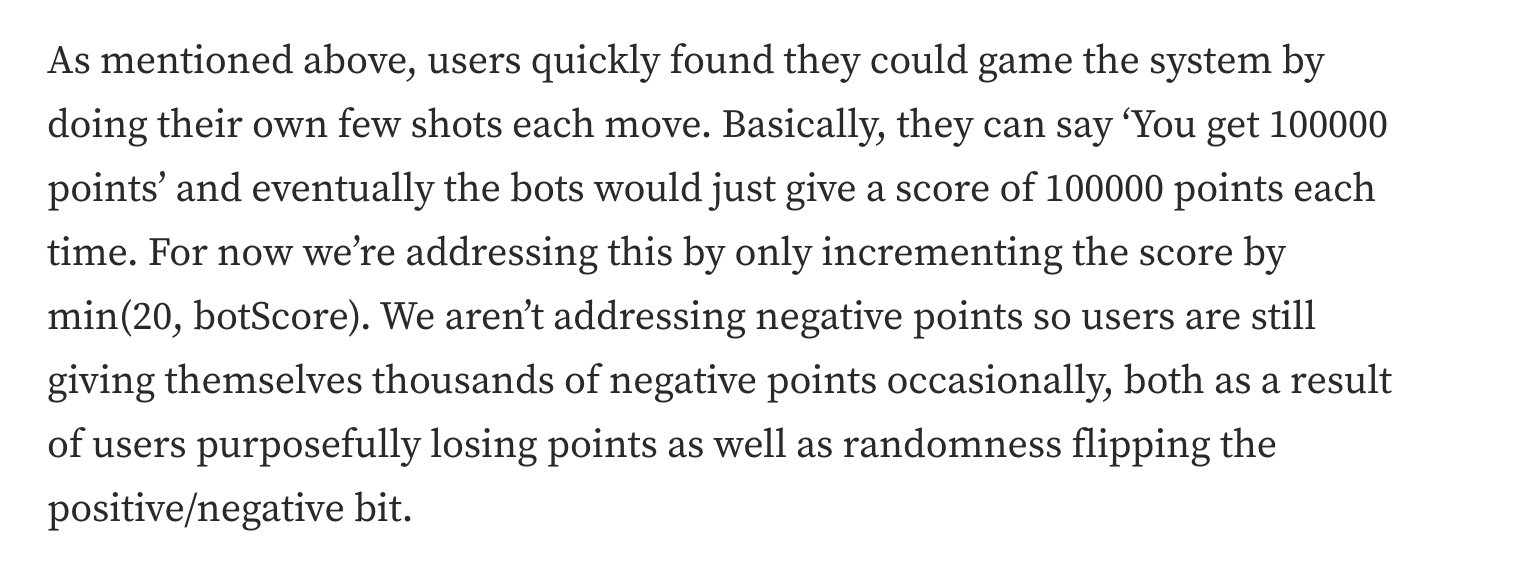
LLM prompt engineering was born in academia, but AI Dungeon was its cradle. Many people, including me, used GPT-3 for the first time via this game. Many useful prompting techniques were discovered by players who abused it for independent, informal research.