2. The "Adversarial Interrogation" "Now argue against your previous answer. What are the 3 strongest counterarguments?" Models are overconfident by default. This forces intellectual honesty.
@godofprompt
-
The ‘Show Your Work’ Prompt for AI Reasoning
By
–
1. The "Show Your Work" Prompt "Walk me through your reasoning step-by-step before giving the final answer." This prompt forces the model to externalize its logic. Catches errors before they compound.
-
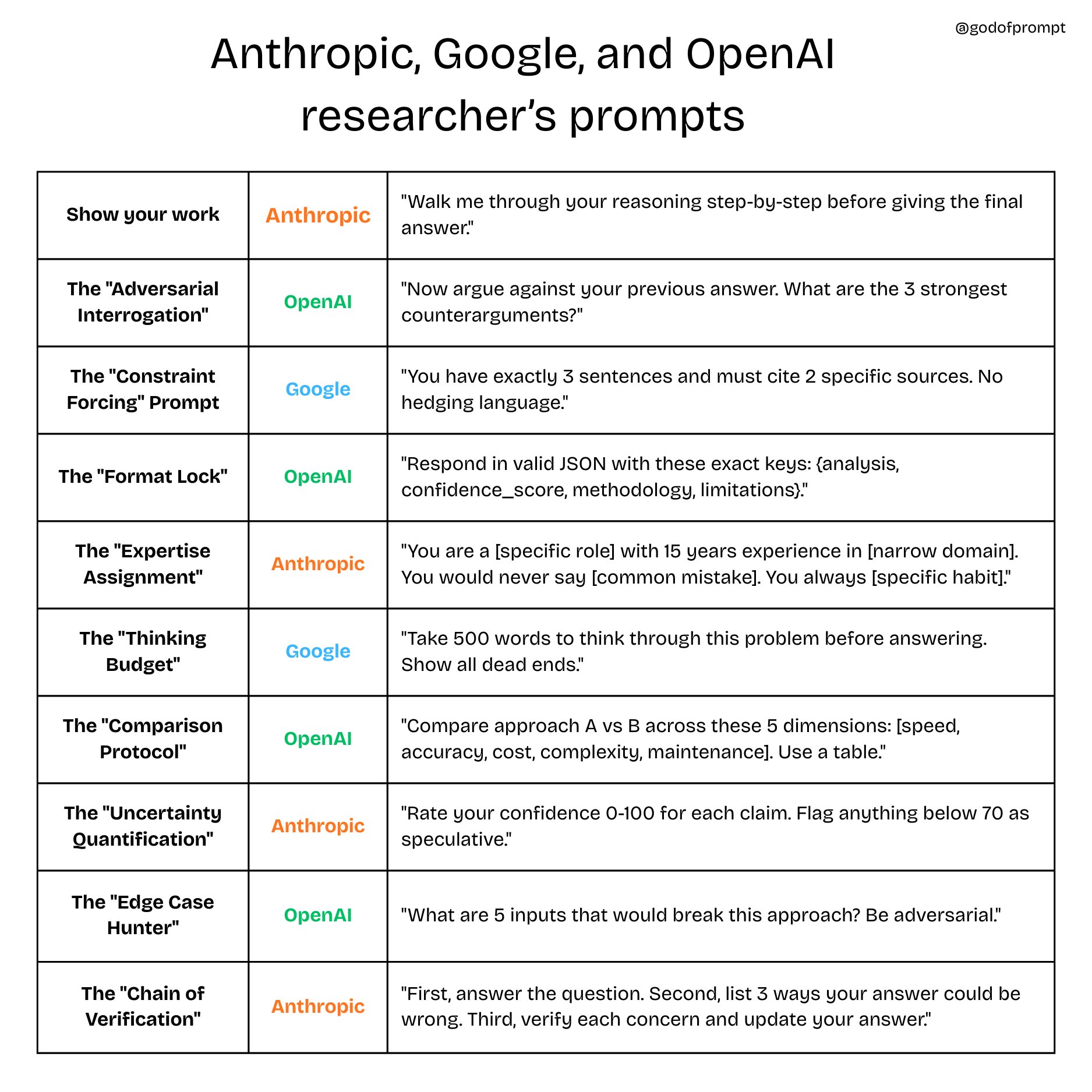
AI researchers reveal their top 10 prompts
By
–
After interviewing 12 AI researchers from OpenAI, Anthropic, and Google, I noticed they all use the same 10 prompts. Not the ones you see on X and LinkedIn. These are the prompts that actually ship products, publish papers, and break benchmarks. Here's what they told me ↓
-

Prompt engineering for AI workflow optimization
By
–
I turned Matt Shumer's viral article into a prompt. The prompt inverts the article's structure. Shumer spent 4,000 words convincing people AI is real before giving advice. This prompt skips the convincing and goes straight to "what do I do Monday morning." Prompt AI
-
AI agents lose context without better prompts
By
–
the last 20% is where context matters most and where agents lose the plot. shipping this as a standalone tool instead of "just use a better prompt" is the right call.
-

Founders’ AI ethics vs addictive algorithms critique
By
–
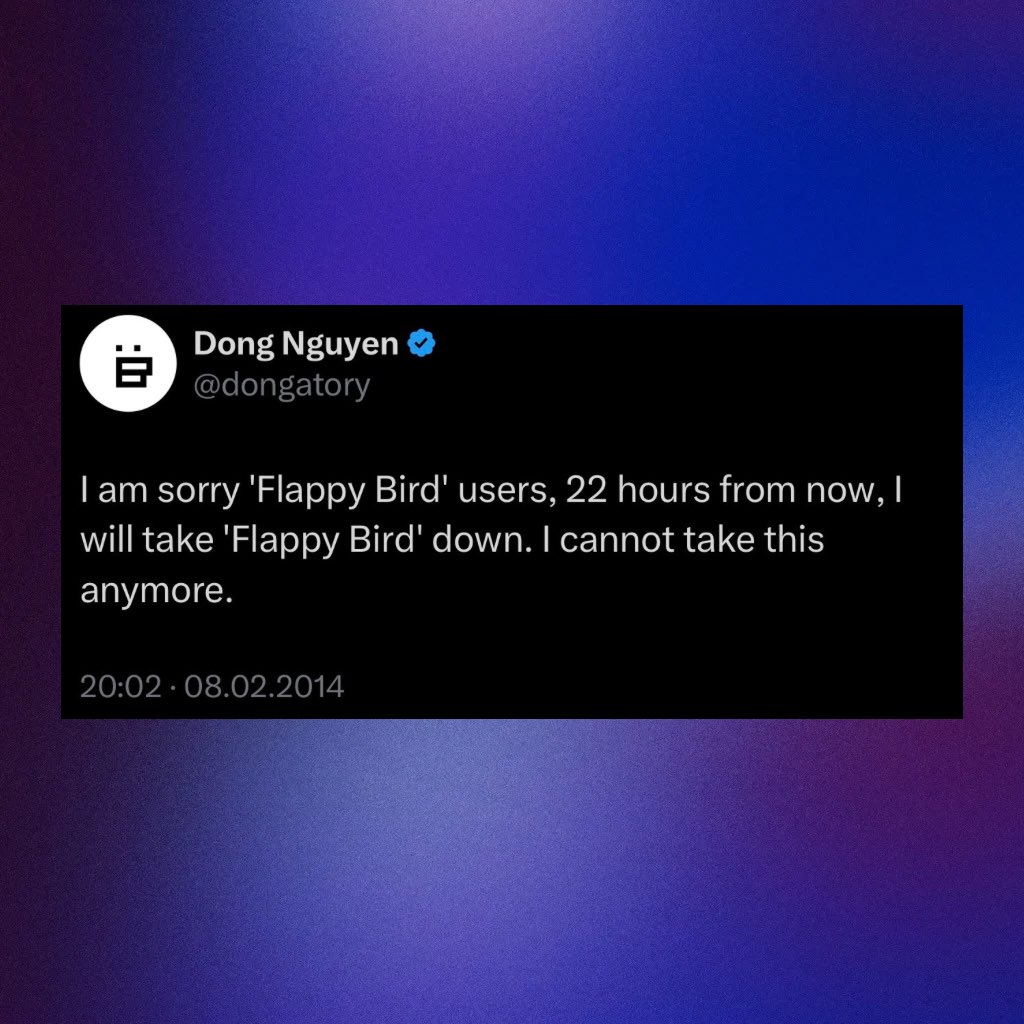
Most founders talk about "ethics in AI" at conferences while shipping engagement-maximizing algorithms the next morning. Dong Nguyen actually deleted $50K/day because people were too addicted. A solo dev in Hanoi had more ethical backbone than entire AI companies. Now think
-

OpenClaw’s rapid growth and safe setup guide
By
–
OpenClaw hit 145K GitHub stars and became the fastest-growing open-source AI project in history. But 90% of people installing it have no idea how to set it up safely. That's why I built the OpenClaw Starter Guide. It covers:
→ Full architecture breakdown (Gateway, Agent, -

Structured Prompting for Better AI Outputs
By
–

PATTERN 3: Specify output structure Bad: "Be organized" Good: "Structure: [Problem] → [Solution] → [Implementation]. Use code blocks with language tags. Max 3 paragraphs per section. No emojis unless I use them first." ChatGPT follows this 94% of the time now.
-

Negative instructions improve ChatGPT output
By
–

PATTERN 1: Tell ChatGPT what NOT to do Bad: "Be concise" Good: "Never use: delve, landscape, robust, utilize, leverage, it's important to note, in conclusion" Why it works: Negative instructions are specific. Positive instructions are vague. Output quality jumped 2.1x with