Challenge 4: The Hallucination Trap Before the interview, generate an AI output about a topic relevant to the role. Leave 2-3 subtle factual errors in it. Realistic-sounding but wrong. Hand it to the freelancer. Ask them to review it. Do they catch the errors without being
@godofprompt
-
Prompt-engineering iteration exercise for improving AI outputs
By
–
Challenge 3: The Iteration Loop Run a basic prompt that produces a generic, C-minus output. Show it to them on screen. Ask them to make it better using only follow-up prompts. No rewriting by hand. What to watch for: Do they give specific direction ("tighten the intro to one
-
Improving a Prompt: The Constraint Architect
By
–
Challenge 2: The Constraint Architect Hand them this prompt and ask them to improve it before running it: "Write a blog post about marketing." Then count. How many constraints do they add? Audience. Word count. Tone. Structure. Examples. Output format. Point of view. What to
-
Cold Start Prompting Test for AI Assistants
By
–
Challenge 1: The Cold Start Test Give them this brief and nothing else: "Write me a landing page for my product." No context, audience, tone. Not even constraints. Now watch. Do they paste it straight into Claude or do they ask you 3-5 clarifying questions first? A skilled
-

Use Claude for Live Prompting Skill Tests to Filter Freelancers
By
–
THIS WORKS: You can use Claude to filter out freelancers who are faking their prompting skills. Open a shared screen. Give them a fresh Claude session. Run these 7 challenges live, like a coding interview but for prompting. Nothing rehearsed. Just them, Claude, and 30
-
Trend: Fewer Modes, More Autonomous AI Coding Agents
By
–
This is the AI coding agent trend in one sentence: Fewer modes. More autonomy. TRAE is moving from “pick the right coding assistant” to “tell one agent what to build and let it orchestrate the workflow.” Try it here:
-
SOLO Agent Dynamically Loading MCPs for Real-World Apps
By
–
The MCP side is especially interesting. TRAE’s unified SOLO Agent can dynamically load configured MCPs as the project evolves, instead of getting boxed into one rigid setup. That matters when you’re building real apps with databases, payments, AI services, and deployment tools.
-
AI agents that automate idea-to-deployment workflows
By
–
That’s the real unlock: Less mode-switching.
Less setup friction.
Less “wait, which workflow do I need?” The agent can move from idea → app → tool connections → deployment without forcing you to babysit every step. -
SOLO Agent auto-selects tools and sub-agents
By
–
This sounds small until you actually build with agents. Before, you had to pick the right agent for the right task. Now you just describe what you want. TRAE’s SOLO Agent decides which capabilities, tools, MCPs, and sub-agents to use automatically.
-
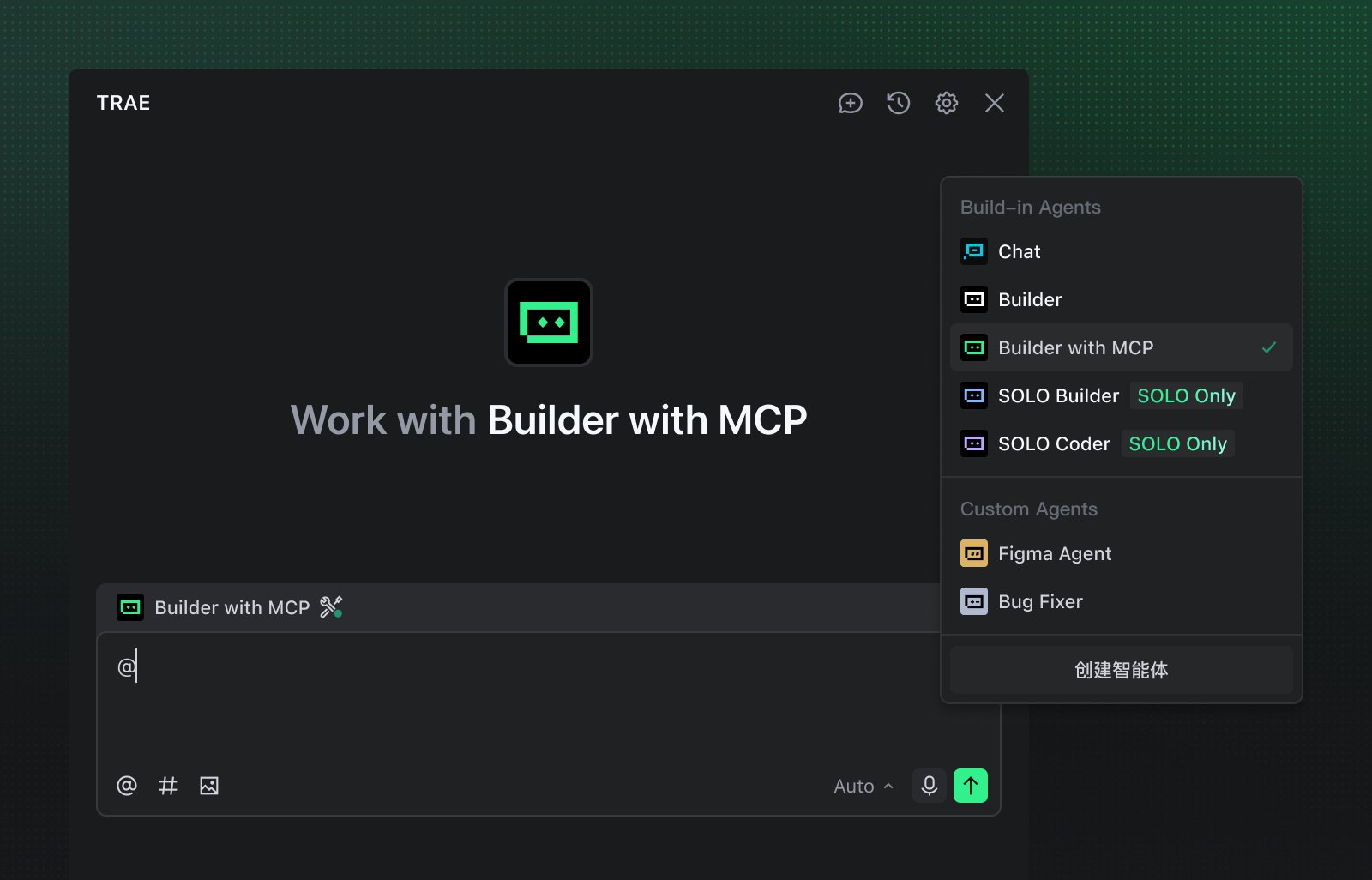
Trae merges SOLO Builder and SOLO Coder into unified SOLO Agent
By
–
TRAE just killed the “which agent should I use?” problem. SOLO Builder and SOLO Coder are now merged into one unified SOLO Agent. One agent for frontend apps, complex programming tasks, routine dev work, MCPs, tools, and shipping. @Trae_ai