Without the right context, even the most advanced agents fail to give reliable answers. And when context is incomplete, AI will fill the gaps. “Agents need one system of record, with all of your data and unified governance,” says Databricks co-founder and CEO, @alighodsi
.
@databricks
-

Agents need one system of record with unified governance
By
–
-
Databricks introduces Genie One, AI coworker for business teams
By
–
Meet Genie One, the data-smart AI coworker for business teams.
— Databricks (@databricks) 16 juin 2026
There's no shortage of AI assistants for business users. What they lack is an AI coworker that understands the business, knows what data to trust, and can turn answers into action.
Genie One is designed to close… pic.twitter.com/0TVfVY8lFUMeet Genie One, the data-smart AI coworker for business teams. There's no shortage of AI assistants for business users. What they lack is an AI coworker that understands the business, knows what data to trust, and can turn answers into action. Genie One is designed to close
-
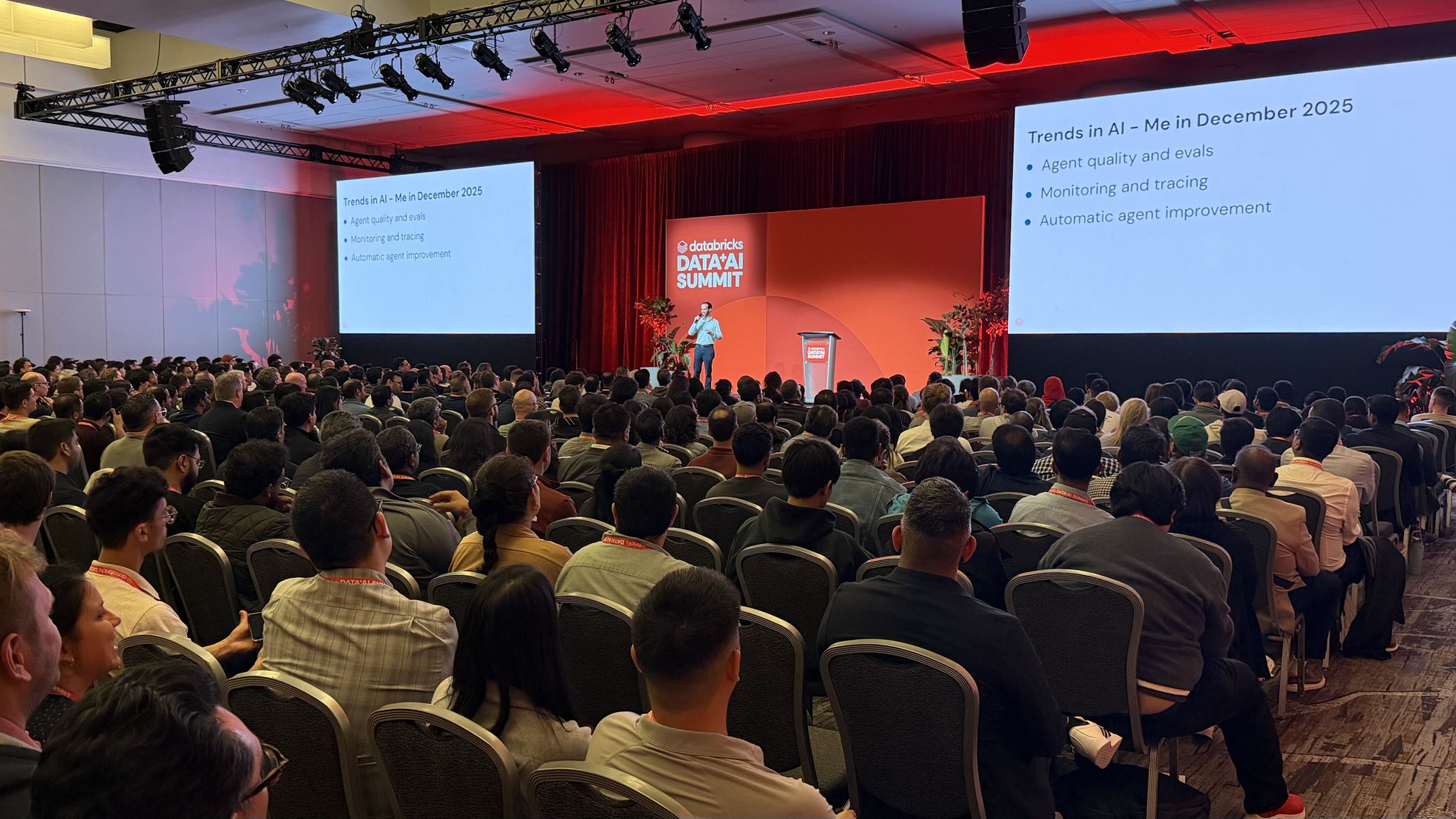
AI quality isn’t measured by token count, says Databricks scientist
By
–
"Just trying to use the most AI is like maximizing the number of lines of code you write. That's not a good measure of software quality, nor is the number of tokens." Databricks Chief AI Scientist @jefrankle kicked off tonight's DevConnect Meetup at #DataAISummit 2026 by
-
Apps & Agents for Good Hackathon at DataAISummit using Databricks and OpenAI
By
–
Builders are gathering for the Apps & Agents for Good Hackathon at #DataAISummit! Using Lakebase, Agent Bricks, Databricks Apps, and @OpenAI
, teams will spend the next two days building agentic data apps for social impact. Good luck to all the participants — we're excited to see -
Databricks introduces Omnigen meta-harness for agent orchestration
By
–
Introducing 𝗢𝗺𝗻𝗶𝗴𝗲𝗻𝘁, a meta-harness to combine, control, and share your agents. The best teams already mix models and harnesses and design loops that drive teams of agents. No single harness can keep up with that alone. So we built the layer above — we call it a
-
Databricks Genie expands to predictive analytics with TabPFN and Agent Bricks
By
–
Business users can already use Genie to ask descriptive questions in natural language. Now the same conversational workflow can support predictive analytics too.
— Databricks (@databricks) 12 juin 2026
By combining Databricks Genie, TabPFN, and Agent Bricks, teams can turn questions like “Which customers are likely to… pic.twitter.com/z71u2MoBw2Business users can already use Genie to ask descriptive questions in natural language. Now the same conversational workflow can support predictive analytics too. By combining Databricks Genie, TabPFN, and Agent Bricks, teams can turn questions like “Which customers are likely to
-
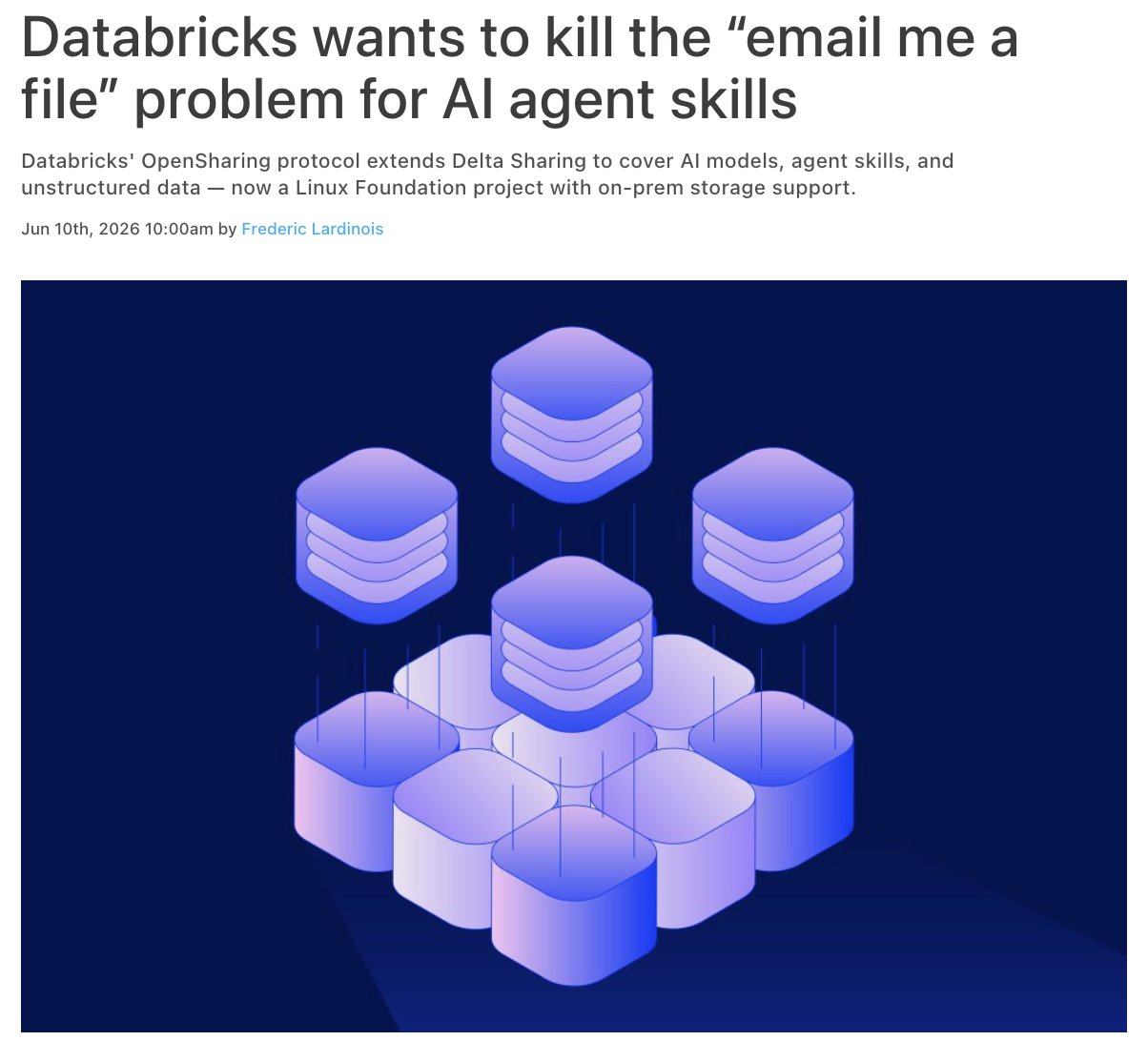
Agentic AI lacks standard protocol for sharing assets across platforms
By
–
The agentic AI stack has standards for connecting tools and defining skills, but it still has no standard protocol to share assets across organizations and platforms. Today that means copying files, custom point-to-point integrations, and fragmented vendor-specific
-
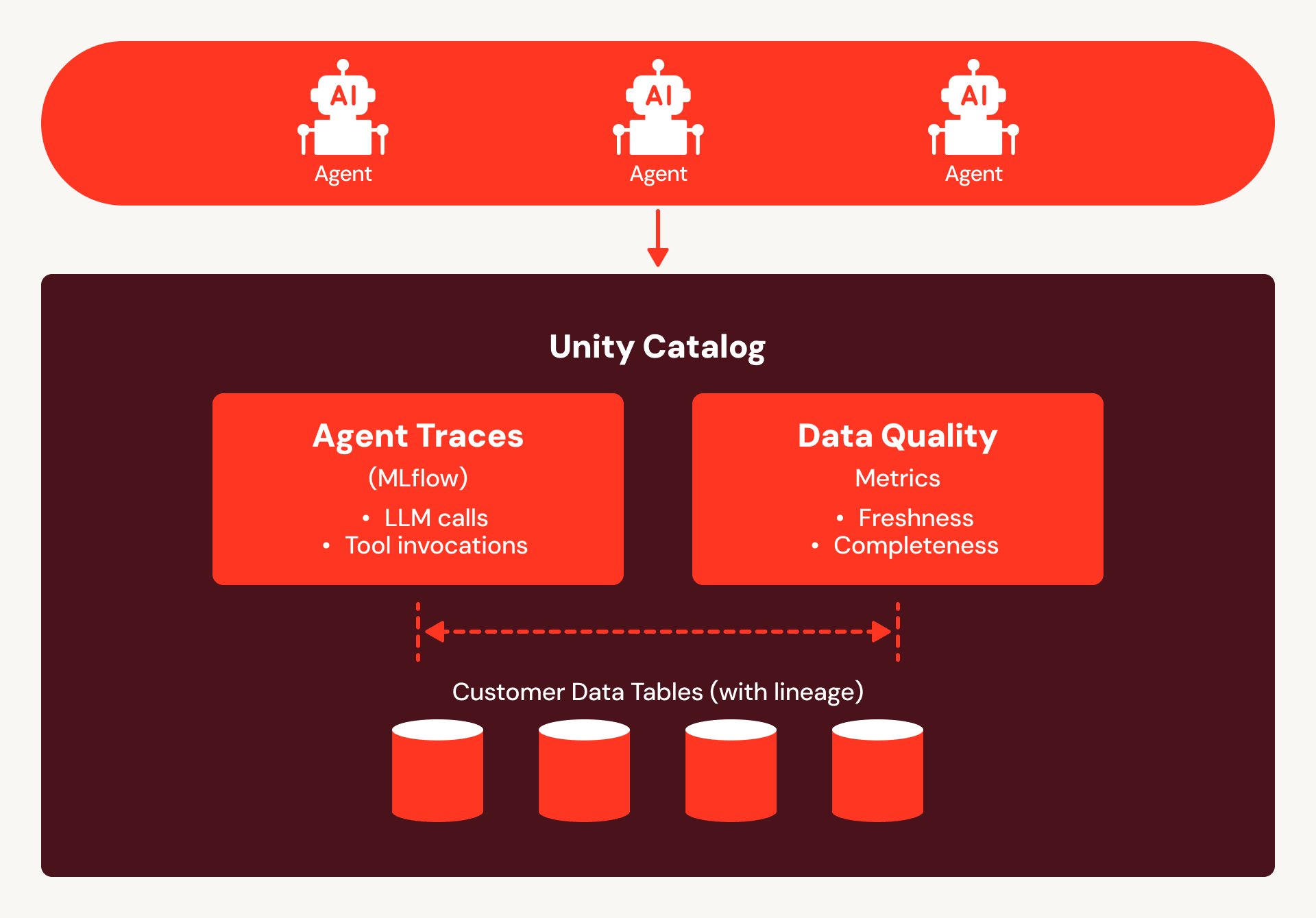
AI Governance as Data Governance: Unity Catalog and AI Gateway
By
–
AI governance is becoming a data governance challenge, and organizations need a consistent way to govern agents, models, MCP servers, and data together. Unity Catalog and Unity AI Gateway extend governance across AI systems with identity-aware access controls, runtime policies,
-
Databricks announces OpenSharing standard for data and AI sharing
By
–
Announcing OpenSharing, a new open standard for sharing data and AI assets across platforms and organizations. Five years ago, we pioneered open data sharing with Delta Sharing, the most widely adopted open protocol for secure zero-copy data sharing – used by thousands of
-
Claude Fable 5 now available on Databricks across AWS, Azure, GCP
By
–
.
@AnthropicAI
's Claude Fable 5 is now available on Databricks, governed by Unity AI Gateway, across AWS, Azure, and GCP! Fable 5 sets a new state of the art on OfficeQA Pro at 57.9% and is designed for work that was previously too complex or too long-running to hand to an AI.