
In my experiment, a preference predictor was able to pick up the performance patterns of different models. One pattern is that for simple prompts, weak models can do (nearly) as well as strong models. For more challenging prompts, however, users are much more likely to prefer
@chipro
-

Predicting Best AI Model Selection for User Queries
By
–
A challenge of building AI applications is choosing which model to use. What if we don’t have to? What if we can predict the best model for any prompt? Predictive human preference aims to predict which model users might prefer for a specific query. One use case is model
-
Voltron Data Acquires Claypot for Real-Time AI Applications
By
–
Claypot AI is joining Voltron Data! AI starts from data. By joining forces, we can further help companies leverage both batch and real-time data for AI applications, on top of Voltron Data’s GPU-native distributed engine Theseus. https://
venturebeat.com/data-infrastru
cture/exclusive-voltron-data-acquires-claypot-to-unlock-real-time-ai-with-modular-data-systems/
… For AI, GPUs are mostly -
Sampling Strategies for AI Text Generation: Temperature, Top-K, Top-P
By
–
New post: Sampling for Text Generation https://
huyenchip.com/2024/01/16/sam
pling.html
… Many challenges (and opportunities) in working with AI today stem from the way models sample their outputs. This post covers: 1. Sampling strategies and variables including temperature, top-k, and top-p.
2. How -
Gemini Technical Report: TPU Training, Performance vs GPT Models
By
–
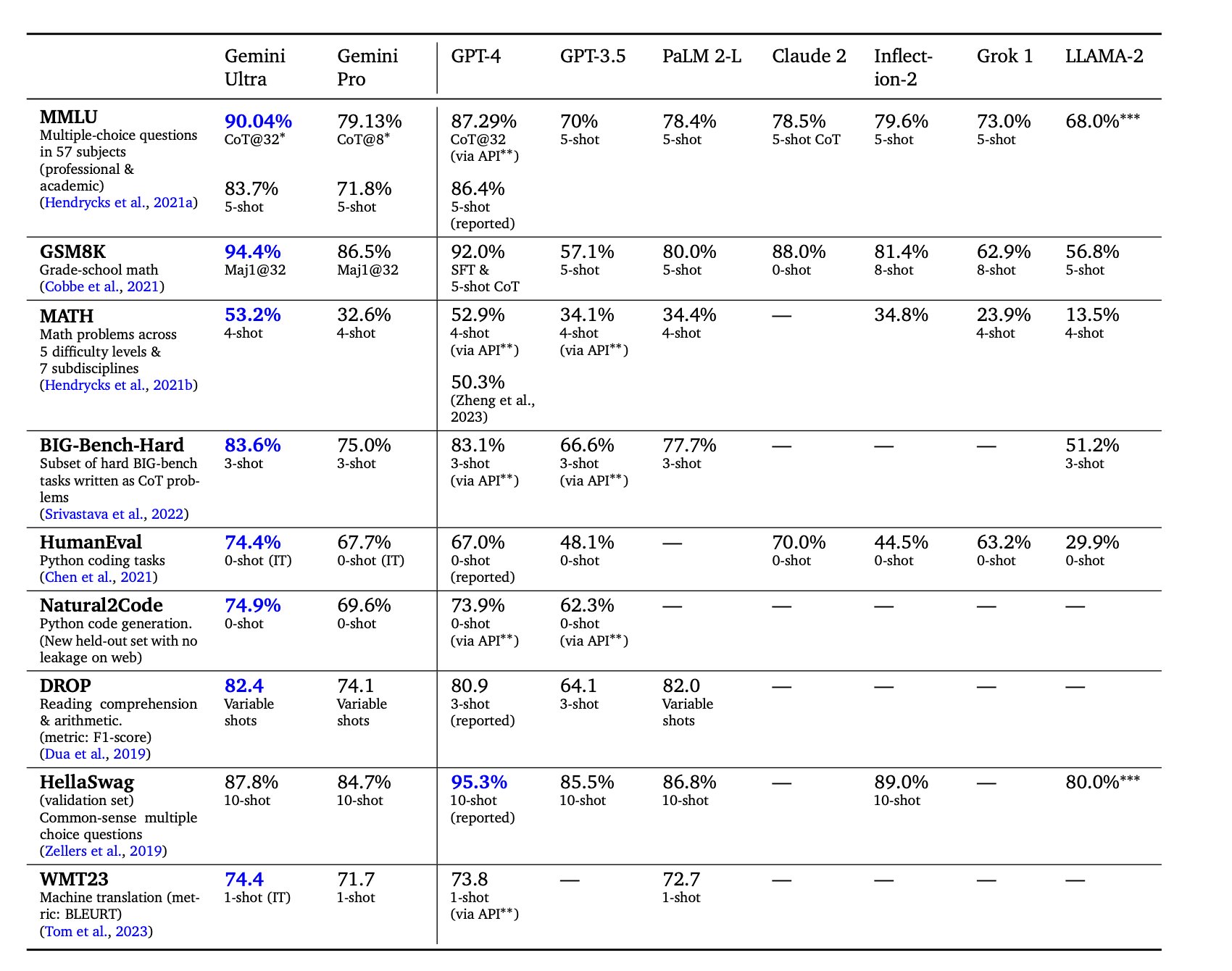
Summary of Gemini's 60-page technical report. 1. Written in Jax and trained using TPUs. The architecture, while not explained in details, seems similar to Flamigo's. 2. Gemini Pro's performance is similar to GPT-3.5 and Gemini Ultra is reported to be better than GPT-4. Nano-1
-

Multimodality and Large Multimodal Models Explained
By
–
New blog post: Multimodality and Large Multimodal Models (LMMs) Being able to work with data of different modalities — e.g. text, images, videos, audio, etc. — is essential for AI to operate in the real world. This post covers multimodal systems in general, including Large
-

Open Challenges in Large Language Model Research Today
By
–
Open challenges in LLM research The first two challenges, hallucinations and context learning, are probably the most talked about today. I’m the most excited about 3 (multimodality), 5 (new architecture), and 6 (GPU alternatives). Number 5 and number 6, new architectures and
-

Generative AI Strategy: Slides and Insights from Expert Talk
By
–
I had so much fun preparing this talk. Per request, here are the slides: https://
huyenchip.com/2023/06/07/gen
erative-ai-strategy.html
… The idea came from many conversations I’ve had recently with friends who need to figure out their generative AI strategy. I’d love to hear about your experience through this process. -

RLHF: Reinforcement Learning from Human Feedback Explained
By
–
New post: RLHF – Reinforcement Learning from Human Feedback Discussing 3 phases of ChatGPT development, where RLHF fits in, how RLHF works, hypotheses on why it works, and relationship between RLHF and hallucination. https://
huyenchip.com/2023/05/02/rlh
f.html
… -
In-House LLMs: Benefits and Drawbacks for Companies
By
–
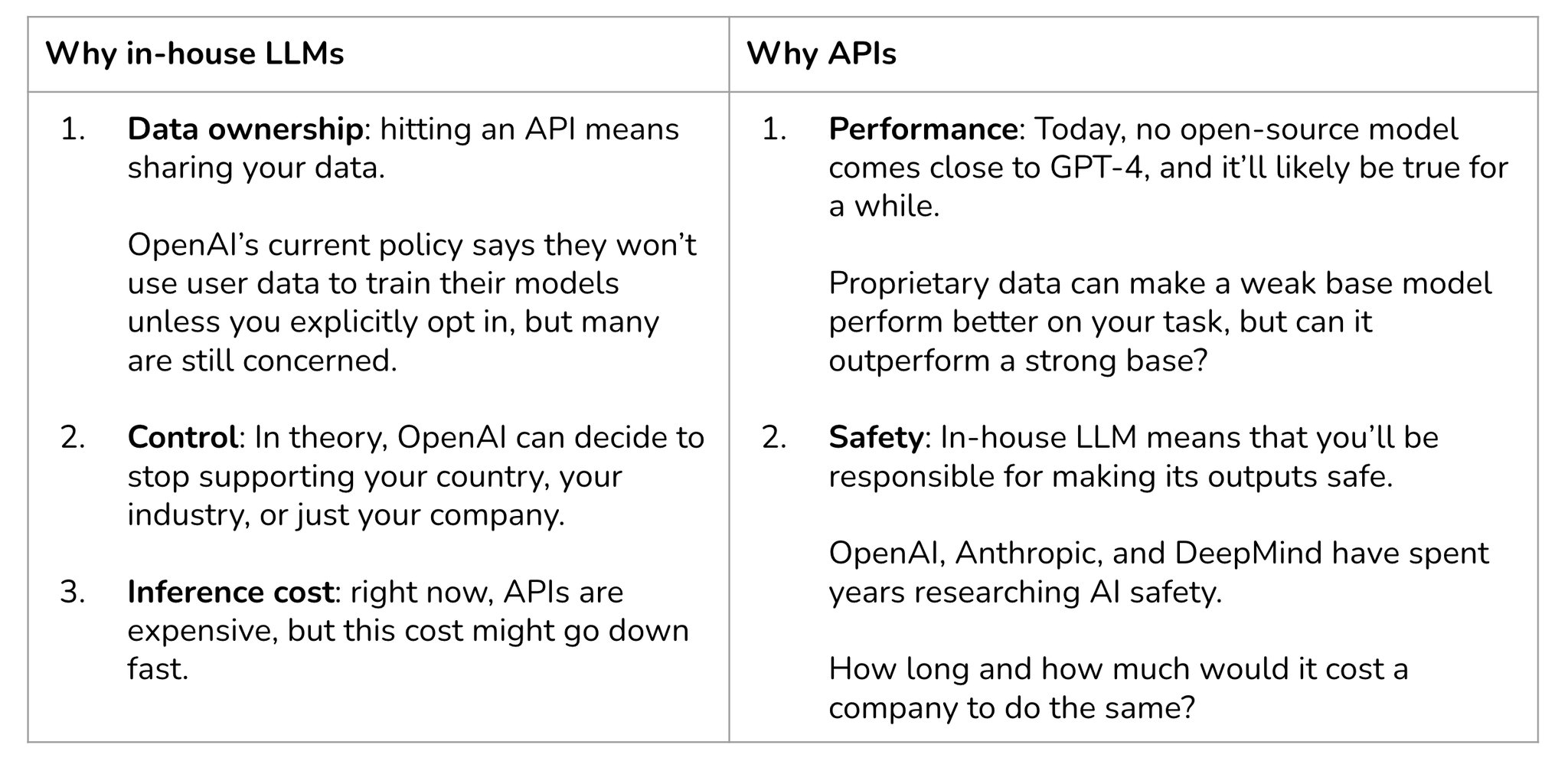
Many companies seem to want their own in-house LLMs: finetune an open-source LLM on their own data. Here are a few reasons for and against in-house LLMs I can think of. Would love to hear your thoughts.